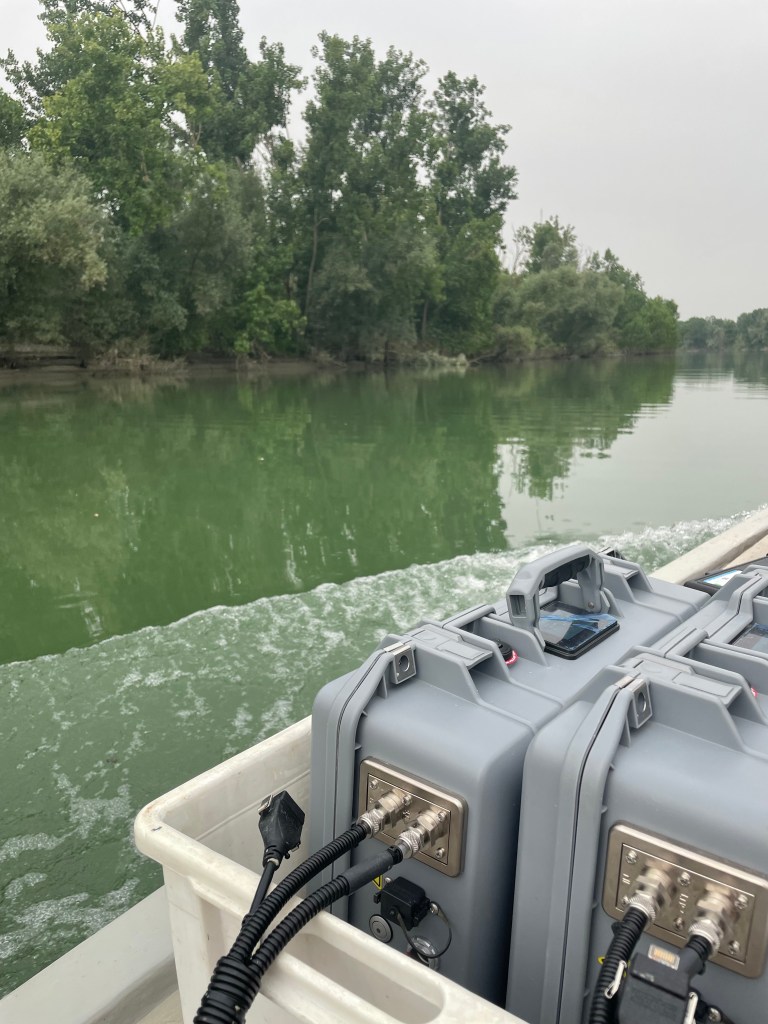
After months of connection with the Po River, the oxbow lake has recently started to disconnect and become a separate environment as a consequence of restoration actions. We have measured the greenhouse gas fluxes at the water-atmosphere interface to evaluate the effects of this ecological restoration on the riparian environment. Within the REWET project, we use LI-COR portable analyzers to measure in real time the fluxes of gases such as methane, carbon dioxide, and nitrous oxide.
The oxbow lake in Gussola (Cremona), once part of the dynamic system of the Po River, is transitioning into an isolated habitat. This shift can have significant ecological implications, particularly concerning the emissions of greenhouse gases. By measuring the gas fluxes at the interface where water meets the atmosphere, we aim to assess the environmental impact of this disconnection. The use of advanced portable analyzers provides real-time data on the emission levels of key greenhouse gases—methane (CH4), carbon dioxide (CO2), and nitrous oxide (N2O). This real-time monitoring is crucial for understanding how the separation from the river influences gas exchanges and overall ecological health. The findings from these measurements within the REWET project can offer insights into the broader impacts of hydrological changes on riparian ecosystems and inform strategies for environmental management and conservation.

As seen in the video, the water level is just below the embankment, which was lowered a year ago to facilitate the river’s entry into the riparian area and flood the lands that once belonged to the river. These habitat restoration actions provide a unique opportunity to study changes in natural environments, particularly regarding greenhouse gas emissions at the water-atmosphere interface.

#REWET project: REstoration of WETlands to minimise emissions and maximise carbon uptake. A strategy for long-term climate mitigation. Funded by the European Union.
 Sara Benelli